
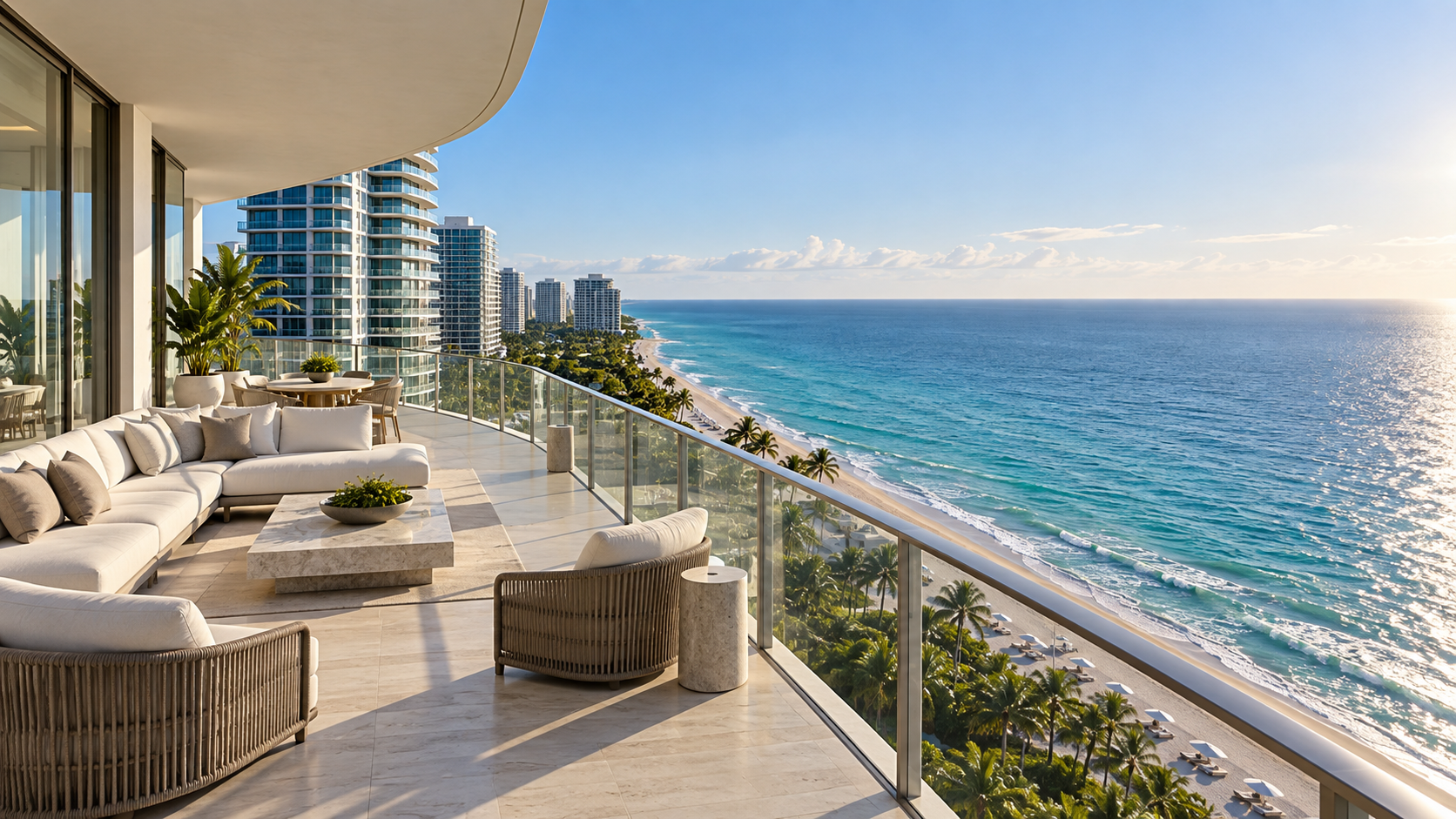
 Conceptual Bal Harbour-inspired oceanfront terrace and coastline exposure; not a photograph of a specific building or listing.
The direct answer
Select the residence by testing the exact line, not by floor number alone. Compare the ocean angle from the primary rooms, separation from neighboring towers, terrace depth, morning sun, wind, privacy and the route from private or shared elevator to the front door. Then evaluate the building's current financial and physical records. A higher floor may expand the horizon, but the best residence is the one whose sightlines, layout and service experience justify its complete ownership cost.
What makes Bal Harbour different
Bal Harbour's compact oceanfront setting creates meaningful differences between direct-ocean, angled-coastline, bay and village exposures. Tower position and neighboring setbacks can affect privacy as much as floor height. The village publishes building, permit and flood information, and its beach-renourishment program demonstrates that the shoreline is actively managed. Those public facts provide context; they do not establish the future view, private terrace conditions or financial strength of one association.
Build the address-specific file
Tour the line at the hours that matter and photograph the view from the living room, primary bedroom and seated terrace position. Review neighboring parcels and current permits without assuming a protected outlook. Verify terrace and window condition, renovation records and any association restrictions affecting the residence. Pair that physical review with governing documents, budgets, reserves, insurance, inspections, assessments and recent minutes so a view premium is not separated from the building's obligations.
- Compare the exact line from primary rooms and seated terrace positions
- Test sun, wind, privacy and neighboring-tower relationships
- Review public permits without promising a permanent view
- Evaluate the premium alongside building finances and planned work
Todd’s interpretation
Todd's interpretation is that Bal Harbour value often rests on subtle qualities: calm arrival, privacy, service and a view that feels natural from inside the residence. Those qualities cannot be reduced to a floor number. A disciplined comparison can reveal that a lower or angled line offers the better lived experience—or confirm that a rare direct-ocean line merits its premium.
A Local’s Guide
What daily life in Bal Harbour actually feels like
Bal Harbour is a compact, highly curated oceanfront village known for discreet condominium living, luxury retail and a quieter residential tone.
The beach and landscaped path are quieter than central Miami Beach, with the Haulover Inlet defining the village’s northern edge.
The beachfront path, Bal Harbour jetty and nearby Haulover Park support walking, cycling, fishing and ocean access.
Makoto, Le Zoo, Carpaccio and Aba are destination restaurants centered on Bal Harbour Shops and the village’s luxury hotels.
Haulover Marine Center is the nearest major public facility; private condominium and nearby marina arrangements vary by building.
Normandy Shores and Turnberry are the practical nearby choices; Bal Harbour itself is not a golf community.
Bal Harbour Shops is the defining amenity and one of South Florida’s most concentrated luxury retail environments.
Questions Clients Ask
Frequently asked questions
Is the highest available floor always the best choice?
No. Compare the exact line, privacy, view angle, wind, elevator dependence, layout and price rather than assuming height alone determines value.
Can a Bal Harbour ocean view be guaranteed permanently?
Do not assume so without a defensible legal basis. Review neighboring property and permit context and describe only the current sightline.
Why does terrace depth matter?
Depth, orientation, wind and building rules affect whether outdoor space is comfortable and useful rather than merely visible on a floor plan.
Which records belong in a building comparison?
Review governing documents, budgets, reserves, insurance, inspections, assessments, recent minutes and relevant municipal records with qualified professionals.