
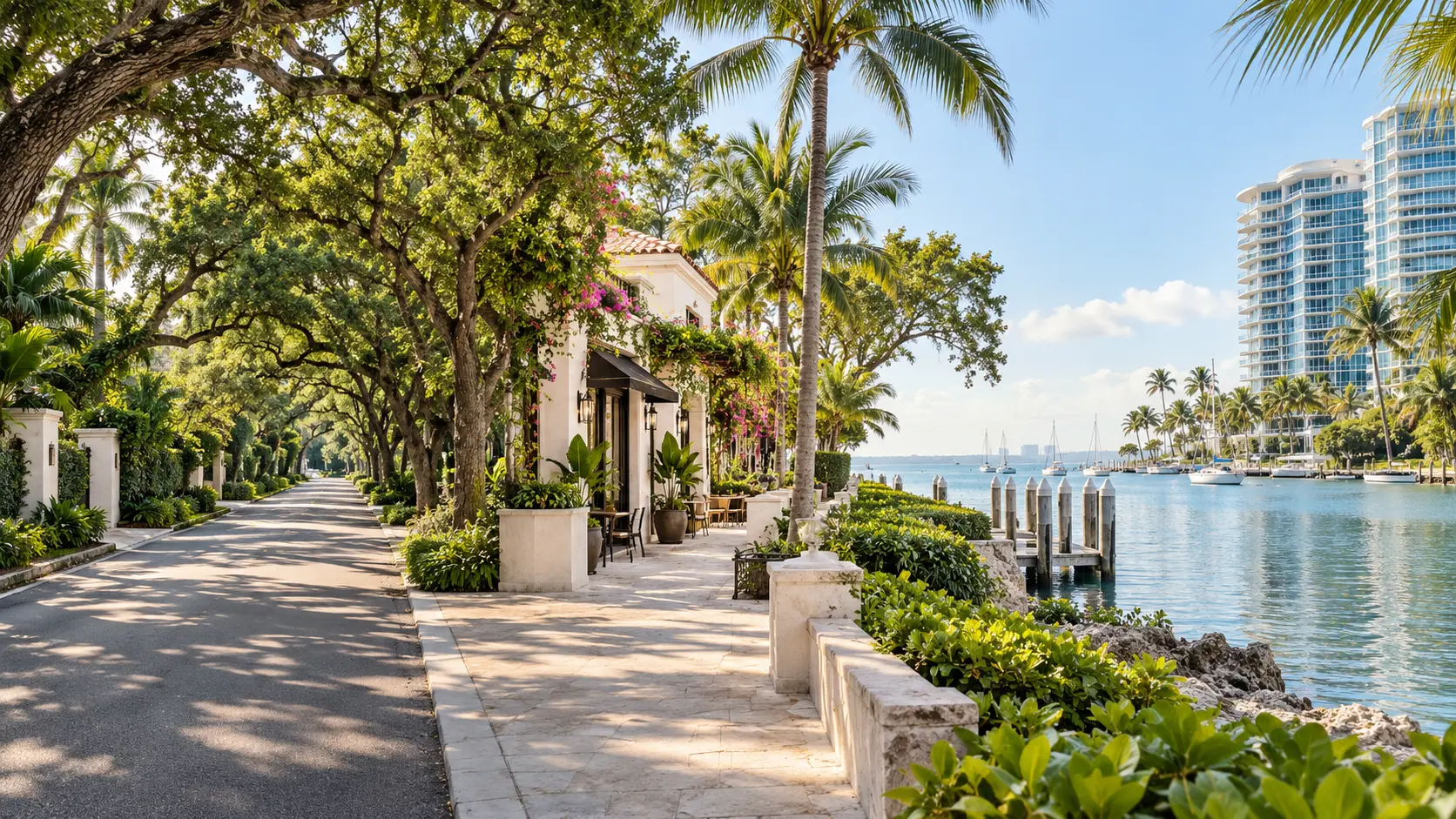
 Conceptual image combining Coconut Grove’s canopy, village and bayfront character; not a photograph of a specific home, condominium or listing.
The direct answer
Start with the setting you will use every day: walkable access to the village, a quieter canopy-lined residential street, a bayfront condominium, or a home closer to waterfront parks and marina activity. Then test the exact block. Coconut Grove is compact, but road pattern, tree cover, elevation, nearby uses and the route to regular destinations can make addresses with the same neighborhood name feel materially different.
The Coconut Grove distinction
City sources document Peacock Park, David T. Kennedy Park, the Coconut Grove waterfront area and the current trolley network. They provide verified locations and public infrastructure, not a promise that every home is conveniently connected to them. A short map distance may involve a busy crossing, indirect street pattern, limited sidewalk or changing trolley service. The City’s GIS and zoning tools also show why the property’s parcel and immediate surroundings matter more than broad north, center or south labels.
Test the exact property and routine
Choose three normal routines—such as morning exercise, groceries and an evening destination—and complete them from each serious address. For homes, review survey, elevation, drainage, tree conditions, permits and road access. For condominiums, add lobby arrival, parking, elevators, association finances, assessments, insurance and leasing rules. Recheck current trolley routes and any park or waterfront construction instead of treating present conditions as permanent.
- Choose the preferred daily setting before the property format
- Walk and drive recurring routes from the exact address
- Review parcel, canopy, elevation and neighboring uses for homes
- Compare association operation and total cost for condominiums
Todd’s interpretation
Todd’s interpretation is that Coconut Grove value is highly micro-location specific. A buyer may prefer a smaller or less newly finished property when its block creates the right privacy, village connection or bay routine. The best shortlist therefore ranks the address experience first and then determines which home or condominium delivers it with acceptable condition and cost.
A Local’s Guide
What daily life in Coconut Grove actually feels like
Coconut Grove blends tropical single-family streets, bayfront parks, sailing culture and an increasingly polished village center.
The Grove is a bayfront rather than beach neighborhood; its water life centers on parks, sailing and marinas, with Key Biscayne beaches nearby.
Peacock Park, The Barnacle, David T. Kennedy Park and The Kampong reflect the neighborhood’s mature landscape and bayfront identity.
Ariete, Los Félix, Amal and Bayshore Club are notable choices, with CocoWalk and Main Highway supporting a walkable restaurant circuit.
Dinner Key Marina, Regatta Harbour, Grove Harbour Marina and Biscayne Bay sailing clubs make this one of Miami’s most active boating neighborhoods.
The Biltmore course in Coral Gables and Crandon Golf on Key Biscayne are the closest major options.
CocoWalk, Commodore Plaza and Main Highway offer boutiques, restaurants and services in a compact village setting.
Questions Clients Ask
Frequently asked questions
Is one part of Coconut Grove best for every buyer?
No. Village access, privacy, bay connection, road approach, property type and recurring destinations create different priorities.
Can buyers rely on the Coconut Grove trolley for a daily trip?
Use the City’s current route, tracker and detour information, then test the actual stop and schedule from the property before relying on it.
Do nearby Grove homes have similar lot conditions?
Not necessarily. Elevation, drainage, trees, setbacks, street grade and permitted improvements should be reviewed for the exact parcel.
Should Grove buyers compare houses and condos?
Yes, when the desired routine is clear but the ownership format is not. Compare privacy, land, service, maintenance and complete cost on equal terms.