
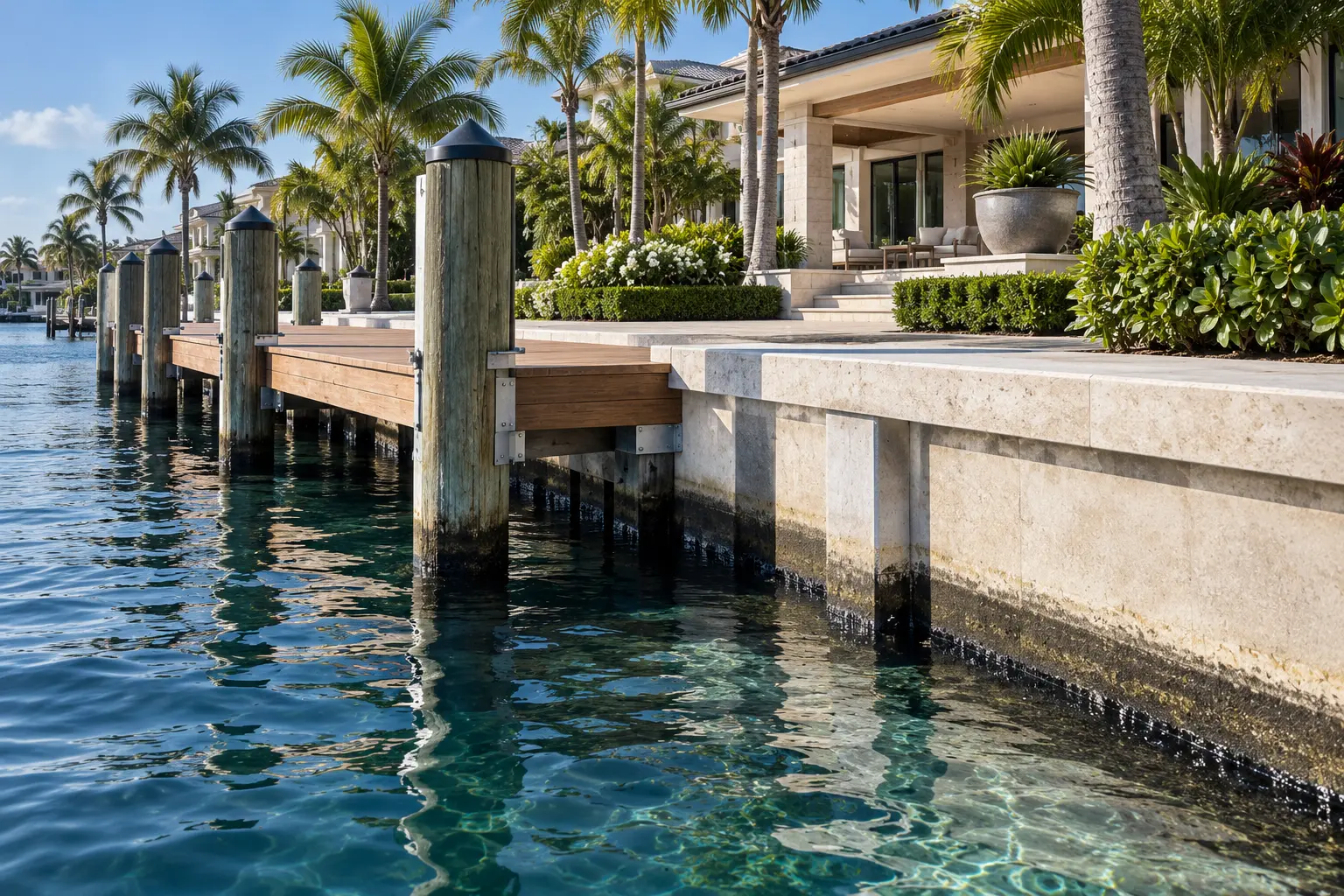
 Conceptual close view of waterfront infrastructure inspired by Coral Ridge; not a photograph of a specific property, seawall, dock or listing.
The direct answer
A Coral Ridge buyer should verify who owns and maintains the seawall, its condition and top elevation, the dock’s permitted configuration, the survey and riparian geometry, and whether the current setup truly fits the intended vessel. Inspection is only one part of the answer; permits, current standards and future capital planning matter too.
The Coral Ridge lens
Coral Ridge includes both waterfront and dry-lot choices, and waterfront utility varies by canal and address. Fort Lauderdale’s updated seawall standards and permitting resources provide a current regulatory baseline, but they do not certify the condition or future scope of work at a particular home. Those conclusions belong to qualified marine, engineering, legal and insurance professionals after property-specific review.
Build the property-specific file
Request the survey, permit history, dock and seawall plans, inspection or repair records, warranties and invoices. Photograph and measure the physical configuration, compare it with the records, and examine the cap, wall, tiebacks where accessible, pilings, decking, utilities, lift and drainage. Model likely work with appropriate contingency before treating the improvements as fully contributory value.
- Confirm seawall ownership, condition and current elevation
- Match the dock and lift to permits, survey and vessel needs
- Separate visible appearance from structural and underwater review
- Include marine capital work in the total property basis
Todd’s interpretation
Todd’s view is that a polished dock can photograph beautifully while leaving important questions unanswered. The strongest Coral Ridge waterfront purchase is the one where the marine infrastructure is documented, professionally reviewed and appropriately priced—not simply admired from the patio.
A Local’s Guide
What daily life in Fort Lauderdale actually feels like
From sunrise along the Atlantic to an evening on Las Olas, Fort Lauderdale moves easily between beach, boating and city life. Its waterfront neighborhoods, modern residences and relaxed sophistication create a lifestyle that feels polished without losing the ease that draws people to South Florida.
Fort Lauderdale Beach has an active, polished promenade; quieter sand and reef access are found north toward Lauderdale-by-the-Sea.
Hugh Taylor Birch State Park, Riverwalk, Holiday Park, Bonnet House grounds and the beachfront path support biking, paddling, walking and year-round outdoor use.
Local standouts include Heritage, Casa D’Angelo, Coconuts and 15th Street Fisheries; Las Olas Boulevard adds a dense mix of restaurants, cafés and evening activity.
Bahia Mar, Pier Sixty-Six Marina, Hall of Fame Marina and the city’s New River facilities anchor a deep marine ecosystem, but bridge, draft and inlet-route details remain address-specific.
Coral Ridge Country Club and Fort Lauderdale Country Club are established private options; nearby public and resort courses broaden the choice.
Las Olas Boulevard, The Galleria and the Riverwalk arts district provide the city’s strongest mix of boutiques, galleries, culture and everyday convenience.
Questions Clients Ask
Frequently asked questions
Is a newer dock enough to prove the seawall is sound?
No. Dock and seawall components should be reviewed separately by qualified professionals, along with available records.
Why does seawall elevation matter?
Current standards, tidal conditions and future work can affect resilience and capital planning; verify the property-specific facts.
Can buyers rely on dock length in a listing?
Use it as a starting point only. Confirm usable dimensions, setbacks, survey geometry, permits and vessel fit.
Should marine work be included in renovation budgeting?
Yes. The house, seawall, dock, lift, drainage and permitting timeline should be modeled as one ownership plan.