
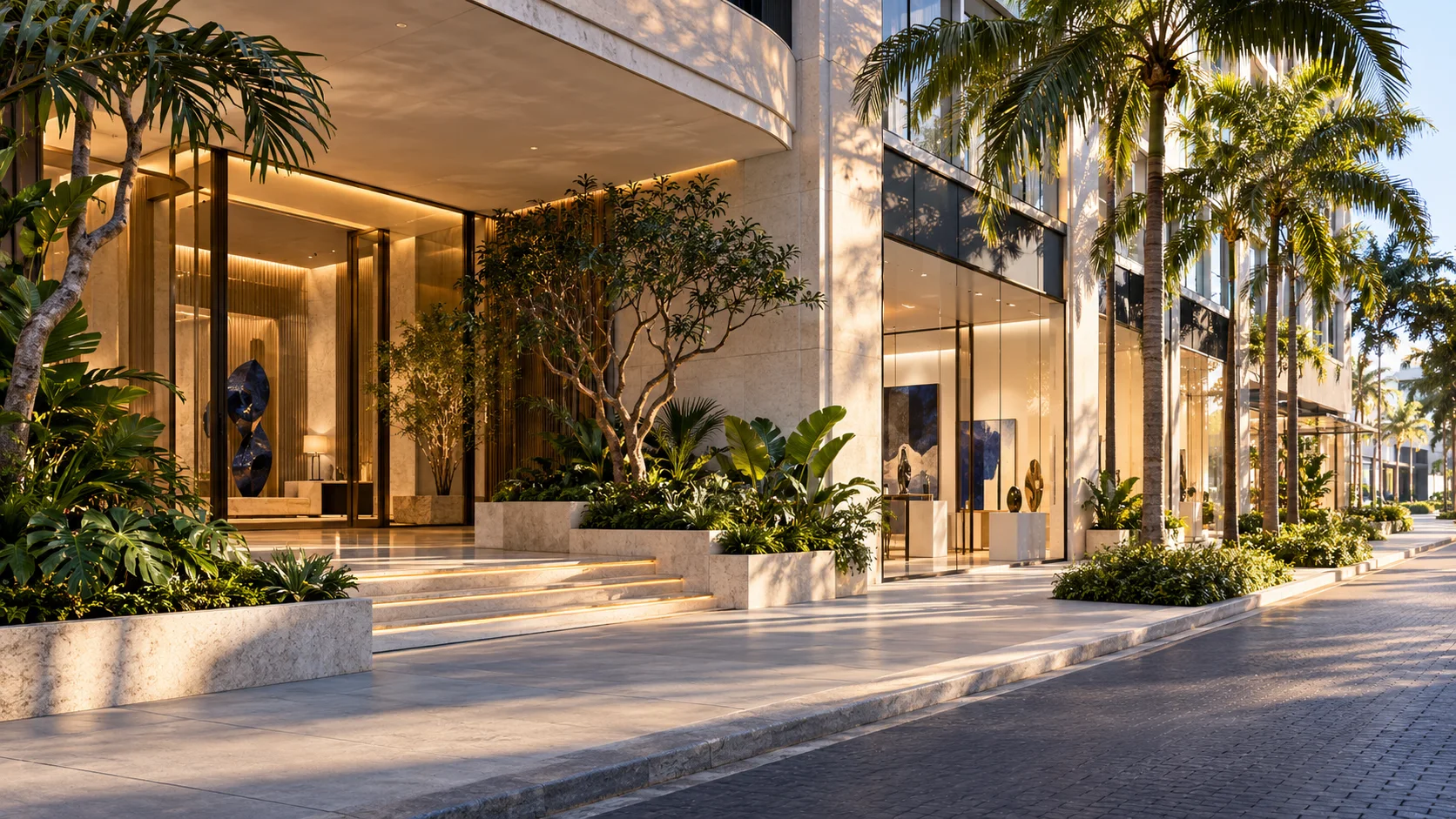
 Conceptual image inspired by a private residential arrival beside Design District retail and gallery uses; not a photograph of a specific building, residence or listing.
The direct answer
Identify every component in the ownership structure before comparing finishes or amenities. In a mixed-use or branded condominium, residential, retail, hotel, parking and shared-access areas may be governed or funded differently. Request the declaration, exhibits, master-association documents, reciprocal easements, current budgets, insurance information and management or brand agreements, then determine which expenses and operating decisions can affect the residence.
The Miami Design District distinction
The Design District combines residential buildings with retail, galleries, hospitality and active streets. City of Miami property and zoning tools can verify the parcel, zoning and public land-use context, but they do not establish a buyer's private financial obligations. Those come from recorded condominium and shared-use documents, budgets and contracts. Two residences close to the same destination can therefore have very different parking, guest, service, noise and expense structures.
Build the property-specific review
Map the route from the residential entrance to parking, elevators, packages and guest access, and visit during both normal and event-heavy periods. Ask which lobbies, garages, loading areas, mechanical systems, amenities and staff are shared. Review how common expenses, insurance deductibles, maintenance, capital work and dispute procedures are allocated. Have condominium and title documents reviewed by qualified legal professionals before relying on a sales summary.
- Identify every residential and nonresidential component
- Review shared-use agreements and expense allocations
- Test parking, guest, loading and event-day operations
- Confirm budgets, insurance, reserves and planned work
Todd's interpretation
Todd's interpretation is that mixed use can be a major advantage when the operation is transparent and the services support the owner's routine. The risk is not retail or hospitality itself; it is buying without understanding who controls shared areas, who pays for them and how the building behaves when activity increases.
A Local’s Guide
What daily life in Miami Design District actually feels like
The Miami Design District is a compact global destination for architecture, contemporary art, luxury retail and chef-driven dining.
The district is inland; residents drive across the causeway for Miami Beach and south or east for waterfront parks.
Palm Court, Jungle Plaza, public art and shaded pedestrian streets make the district itself the primary outdoor experience; Museum Park and Margaret Pace Park are nearby.
L’Atelier de Joël Robuchon, COTE Miami, Mandolin Aegean Bistro and Swan are signature choices across fine dining and relaxed garden settings.
Sea Isle Marina and Miami’s bayfront facilities are nearby, but the district is not a marina neighborhood.
Miami Beach Golf Club and Normandy Shores are the closest prominent golf options.
Flagship fashion houses, design showrooms, galleries and the Institute of Contemporary Art define an experience unlike any other Florida shopping district.
Questions Clients Ask
Frequently asked questions
Does mixed use mean condo owners pay for every commercial expense?
Not automatically. The declaration, exhibits, shared-use agreements and budgets should explain how specific costs and responsibilities are allocated.
Can City zoning records explain the private ownership structure?
No. City records establish public land-use and permit context; recorded condominium documents and contracts establish private rights and obligations.
What should buyers verify about a shared garage?
Confirm ownership, assigned or valet rights, guest access, operating hours, loading routes, EV rules, maintenance responsibility and related charges.
Should a branded residence agreement be reviewed separately?
Yes. Review the current brand, management and service agreements together with the condominium documents and budget.