
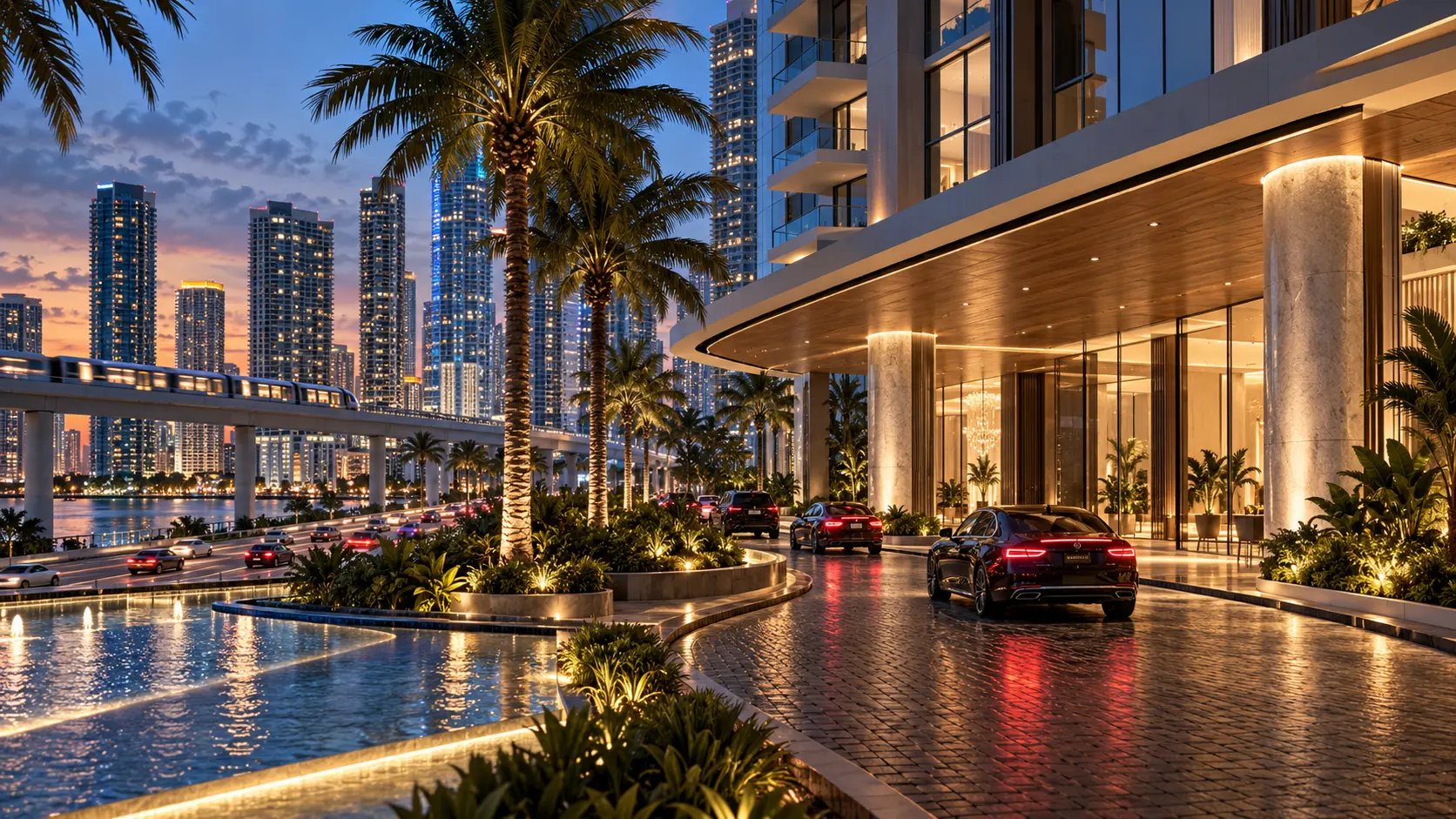
 Conceptual image inspired by a Downtown Miami condominium arrival, city traffic and elevated transit on an event evening; not a photograph of a specific building or venue.
The direct answer
Visit the building when the surrounding district is busy, then test the resident route from street to residence. Drive the primary and alternate garage approaches; time valet or self-parking; observe rideshare, delivery and guest procedures; and use the nearest transit connection. A quiet midday tour cannot show how the building operates when Bayfront Park, the arena or other downtown destinations draw large crowds.
The Downtown Miami distinction
Miami-Dade's free Metromover operates seven days a week in Downtown Miami, Omni and Brickell and connects major destinations including the arena, Bayside and Miami Dade College. During major 2026 Downtown events, the County extended transit service and specifically encouraged visitors to use Metrorail and Metromover to avoid traffic and parking pressure. Those public options can improve mobility, but the buyer still needs to test the exact building entrance, garage, curb and walking route.
Build the property-specific review
Map at least two vehicle approaches and the closest Metromover or Metrorail connection. Review deeded or assigned parking, valet terms, guest parking, loading and delivery procedures, elevator access, security, bicycle storage and any street closures or recurring event patterns. Ask management how residents, vendors and guests are handled during high-demand periods, then verify the answers during a realistic visit. If the home will be used seasonally, also test airport arrival and after-hours access with luggage.
- Tour during a realistic event or high-traffic period
- Test primary and alternate garage and curbside approaches
- Verify parking, valet, guest, delivery and elevator procedures
- Walk the exact transit and daily-service routes—not just the map distance
Todd’s interpretation
Todd’s interpretation is that event energy can be either an advantage or a friction point depending on the buyer's routine. The right building makes arrival predictable and gives residents workable alternatives when streets are busy. The wrong fit can turn occasional programming into a repeated access problem, even when the residence itself is excellent.
A Local’s Guide
What daily life in Downtown Miami actually feels like
Downtown Miami combines Biscayne Bay, museums, arenas, transit and a growing residential skyline at the historic center of the region.
Downtown is bayfront rather than oceanfront; Miami Beach and Key Biscayne are destination trips.
Bayfront Park, Maurice A. Ferré Park and the waterfront museum campus create the central outdoor and cultural spine.
Zuma, Il Gabbiano, NIU Kitchen and Julia & Henry’s illustrate the range from waterfront fine dining to local chef counters.
Miamarina at Bayside and EPIC Marina place dockage directly in the urban core, with additional City of Miami marinas nearby.
Crandon Golf on Key Biscayne and Miami Beach Golf Club are the nearest prominent options.
Bayside Marketplace, Miami Worldcenter and nearby Brickell City Centre serve different visitor, neighborhood and luxury-shopping needs.
Questions Clients Ask
Frequently asked questions
Is Metromover free in Downtown Miami?
Yes. Miami-Dade describes Metromover as a free service operating seven days a week in Downtown Miami, Omni and Brickell.
Why tour a condo during an event?
A busy-period visit can reveal the actual garage approach, curb management, guest process, elevator demand and walking environment that a quiet tour misses.
Should buyers rely on map distance to transit?
No. Walk the exact route and evaluate station access, weather exposure, luggage needs, operating hours and the destinations you will use.
What should a seasonal buyer test?
Test airport arrival, after-hours building entry, luggage handling, parking or valet, guest access, package storage and maintenance-entry procedures.