
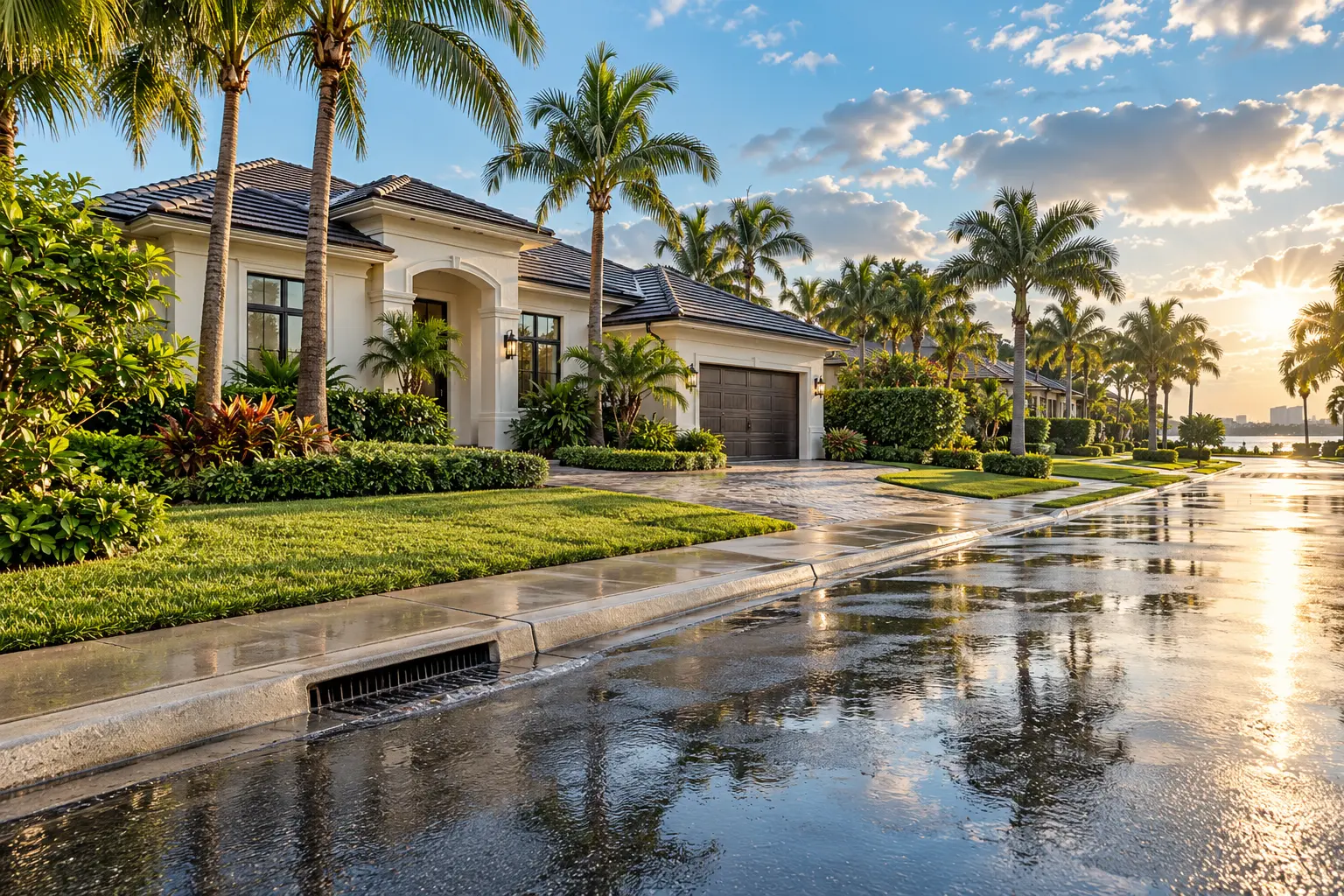
 Conceptual image inspired by Hollywood residential drainage after a normal summer rain; not a photograph of a specific property, street or listing.
The direct answer
Flood zone is only the beginning of a Hollywood offer. Review the exact property’s elevation information, drainage and grading, prior permits, storm-surge context, roof and openings, insurance options and any seawall or flood-barrier responsibilities. Price the home after those property-specific facts are understood—not from a citywide label or a neighbor’s policy.
The Hollywood lens
Hollywood extends from the barrier island and Intracoastal edge through established inland neighborhoods, so exposure changes materially by address. The City provides a flood-risk portal, flood maps, storm-surge information and seawall standards. Those resources establish public facts; an insurer, surveyor, engineer or other qualified professional must translate them into a conclusion for one property and one buyer.
Build the property-specific file
Gather any elevation certificate, current survey, flood-zone determination, permit record, roof and opening documentation, claims history available through the appropriate parties, drainage observations and insurance indications. For waterfront homes, add seawall, dock, tidal-barrier and route review. Visit after rain when practical and inspect how water moves across the lot, street and adjacent properties.
- Use the City’s property-specific flood resources and current FEMA mapping
- Review elevation, grading and drainage at the exact address
- Obtain current insurance guidance before finalizing the offer
- Add seawall and tidal-barrier review for waterfront property
Todd’s interpretation
Todd’s interpretation is that risk should refine the shortlist, not create a blanket judgment about Hollywood. A well-documented home with coherent elevation, drainage, protection and insurance economics may be more attractive than a superficially similar property whose exposure has not been priced or explained.
A Local’s Guide
What daily life in Hollywood actually feels like
Hollywood’s appeal comes from the contrast between a broad, casual beachfront, a real downtown arts district and established residential neighborhoods between Miami and Fort Lauderdale.
Hollywood Beach is defined by its oceanfront Broadwalk, cafés, bike traffic and live entertainment; North Beach Park is quieter and more natural.
Anne Kolb Nature Center, West Lake Park, ArtsPark at Young Circle and the Broadwalk support kayaking, cycling, walking, concerts and family recreation.
GG’s Waterfront, Le Tub Saloon, Olivia and Taverna Opa are recognizable local choices, with casual cafés and restaurants lining the Broadwalk.
Hollywood Marina and Loggerhead Marina Hollywood provide central access; Harbor Islands adds a gated, residential marina-oriented model.
The Club at Emerald Hills, Orangebrook and Hollywood Beach Golf Club cover private-club, municipal and historic in-town play.
Downtown Hollywood’s boutiques, galleries and events feel locally scaled; larger luxury shopping is a short drive away in Aventura or Bal Harbour.
Questions Clients Ask
Frequently asked questions
Is a property outside a mapped high-risk flood zone risk-free?
No. Heavy rain, drainage, storm surge and other conditions can still matter; use property-specific information and qualified advice.
Why should buyers request an insurance indication early?
Availability, coverage, deductibles and cost can affect both affordability and negotiating strategy.
Does an elevation certificate replace an inspection?
No. It addresses specific elevation information; drainage, structure, systems and condition require separate review.
What changes for a waterfront Hollywood home?
Add seawall, dock, tidal-barrier, route and marine-permit due diligence to the home, flood and insurance review.