
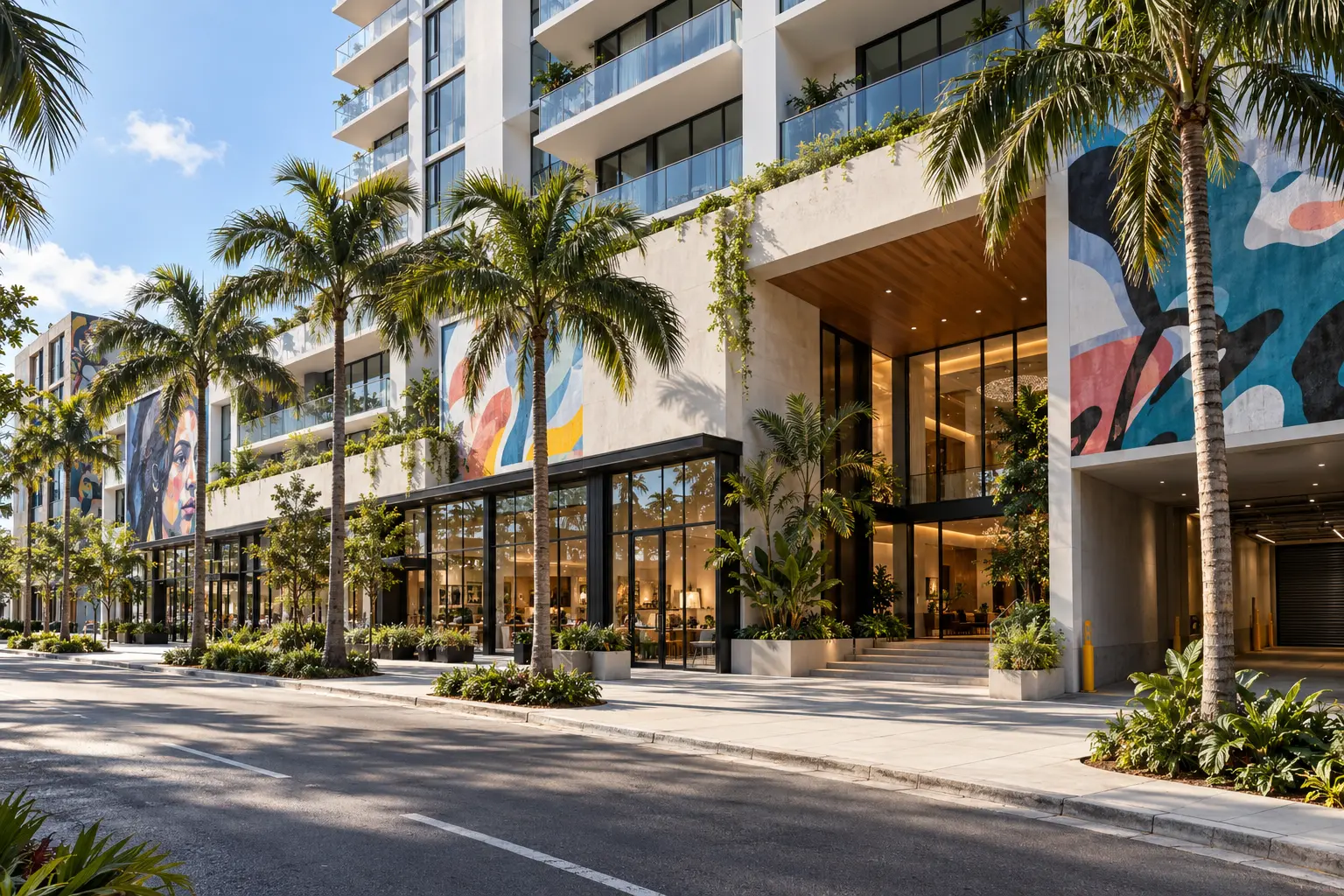
 Conceptual Wynwood-inspired mixed-use streetscape; not a rendering of the Carnegie Mellon campus or a specific property.
The direct answer
Ken Griffin’s reported $1.1 billion purchase of roughly 30 acres in Wynwood puts a major new institution at the center of Miami’s evolving arts and business district. The site is planned for Carnegie Mellon University Miami, a 35-acre campus backed by Griffin’s $3 billion gift to the university. Construction is slated to begin in 2027, and CMU’s current plan is to enroll its first graduate students in 2028, subject to regulatory approvals.
For Wynwood real estate, the campus could add a new source of housing, office, retail and visitor demand. The scale of that effect is not yet known, and the project does not guarantee that nearby property values or rents will increase. Buyers and owners should look at the details of each property and track how the campus, new supply and neighborhood infrastructure develop over time.
What has been announced
Griffin and Carnegie Mellon announced a $3 billion gift on September 30, 2026. Two billion dollars is designated for the launch of Carnegie Mellon University Miami; the remaining $1 billion will support the university’s Pittsburgh campus. CMU describes its Miami plan as a 35-acre campus organized around research and education, with industry research labs and venture studios among the planned components.
The university says that, once complete, the campus is expected to support more than 3,500 undergraduate, master’s and Ph.D. students, nearly 300 faculty members and more than 600 staff members. Its current timeline calls for construction to begin in 2027, graduate enrollment to start in 2028 and the first undergraduate cohort to arrive in 2032. These are plans, not a completed campus or a guarantee that dates will not change.
How the campus could shape nearby real estate
Students, faculty, staff and visiting researchers may look for housing in Wynwood and nearby neighborhoods. That could support interest in apartments, smaller residences, furnished rentals and shared living arrangements. Some people may choose Midtown, Edgewater or the Design District based on budget, commute and preferred housing type. Enrollment is not the same as the number of people who will rent or buy within walking distance; future housing plans and the mix of new supply will matter.
Research labs, venture studios and university-industry partnerships could bring additional interest in nearby office and flexible-use space. Restaurants, cafés, hotels and local services may also see more potential customers over time. The opportunity will depend on what the university builds, how companies choose to locate and whether existing and planned buildings fit those uses.
An institution of this scale can increase attention from developers and investors. It may also intensify questions about construction, traffic, parking, public space and how new projects fit Wynwood’s existing character. The campus announcement by itself does not change the zoning or entitlements of every nearby property.
What buyers and property owners should evaluate
Treat proximity to the planned campus as one factor in a broader property review. For owners, the project may create a timely reason to revisit positioning, rental strategy or future sale plans, but those decisions should still be based on current comparable sales, active competition, building-specific rules and condition—not an assumed campus premium.
- Map the exact property against the campus site, transit and the blocks that fit your intended use
- Confirm zoning, permitted use and any approvals required for a proposed use
- Review association rental rules, minimum lease terms and furnished-rental policies
- Examine building budgets, reserves, assessments, insurance and upcoming capital work
- Consider construction activity, traffic, deliveries, event activity and noise
- Compare current and planned residential, rental, hotel and office supply
- Separate what is happening now from milestones expected to unfold over several years
The outlook: a major catalyst, with outcomes still to come
Carnegie Mellon’s planned Miami campus is a significant commitment to Wynwood and to Miami’s research and technology ambitions. It could broaden the neighborhood’s sources of demand and create new connections between education, business and residential development.
The real estate effects will take time to become measurable. Construction, enrollment, university housing decisions, company demand, zoning approvals and the broader market will all influence what happens. The practical approach is to follow verified milestones and assess each property on its own merits.
A Local’s Guide
What daily life in Wynwood actually feels like
Wynwood is an arts, dining and nightlife district evolving into a denser residential neighborhood, with a street-level energy unlike South Florida’s resort or waterfront markets.
Wynwood is inland; beach time requires a drive to Miami Beach, making it a poor substitute for buyers who want sand outside the door.
Wynwood Walls, Roberto Clemente Park and the neighborhood’s mural-lined streets shape the outdoor experience; larger green spaces are in nearby Edgewater.
Uchi, KYU, Hiden and Pastis Miami are curated standouts amid a large mix of cafés, breweries and chef-driven concepts.
Sea Isle Marina is the nearest major bayfront option, but boating is not integral to the neighborhood’s identity.
Miami Beach Golf Club and Normandy Shores are prominent nearby choices reached by car.
Independent galleries, fashion, design shops and Wynwood Marketplace create a creative retail experience distinct from Aventura or Bal Harbour luxury shopping.
Questions Clients Ask
Frequently asked questions
What did Ken Griffin buy in Wynwood?
Mana Common announced that Moishe Mana sold approximately 30 acres of the Mana Wynwood assemblage to Citadel founder Ken Griffin for approximately $1.1 billion. The site is planned for Carnegie Mellon University Miami.
When is Carnegie Mellon’s Wynwood campus expected to open?
Carnegie Mellon’s current plan is to begin construction in 2027 and enroll its first graduate students in 2028, subject to regulatory approvals. The first undergraduate cohort is planned for 2032.
How many students and employees could the campus support?
Carnegie Mellon says the completed campus is expected to support more than 3,500 students, nearly 300 faculty members and more than 600 staff members. These are projected campus figures, not a count of people expected to live in Wynwood.
Will nearby home prices increase because of the campus?
That cannot be predicted from the announcement alone. The campus could influence demand, but prices also depend on inventory, financing, building costs, zoning, property condition and broader market conditions. No particular increase is guaranteed.
Where can I see homes and developments in Wynwood?
Visit Todd Nemeroff’s Wynwood real estate page for neighborhood information, development links and current search options. Availability and listing details can change.