
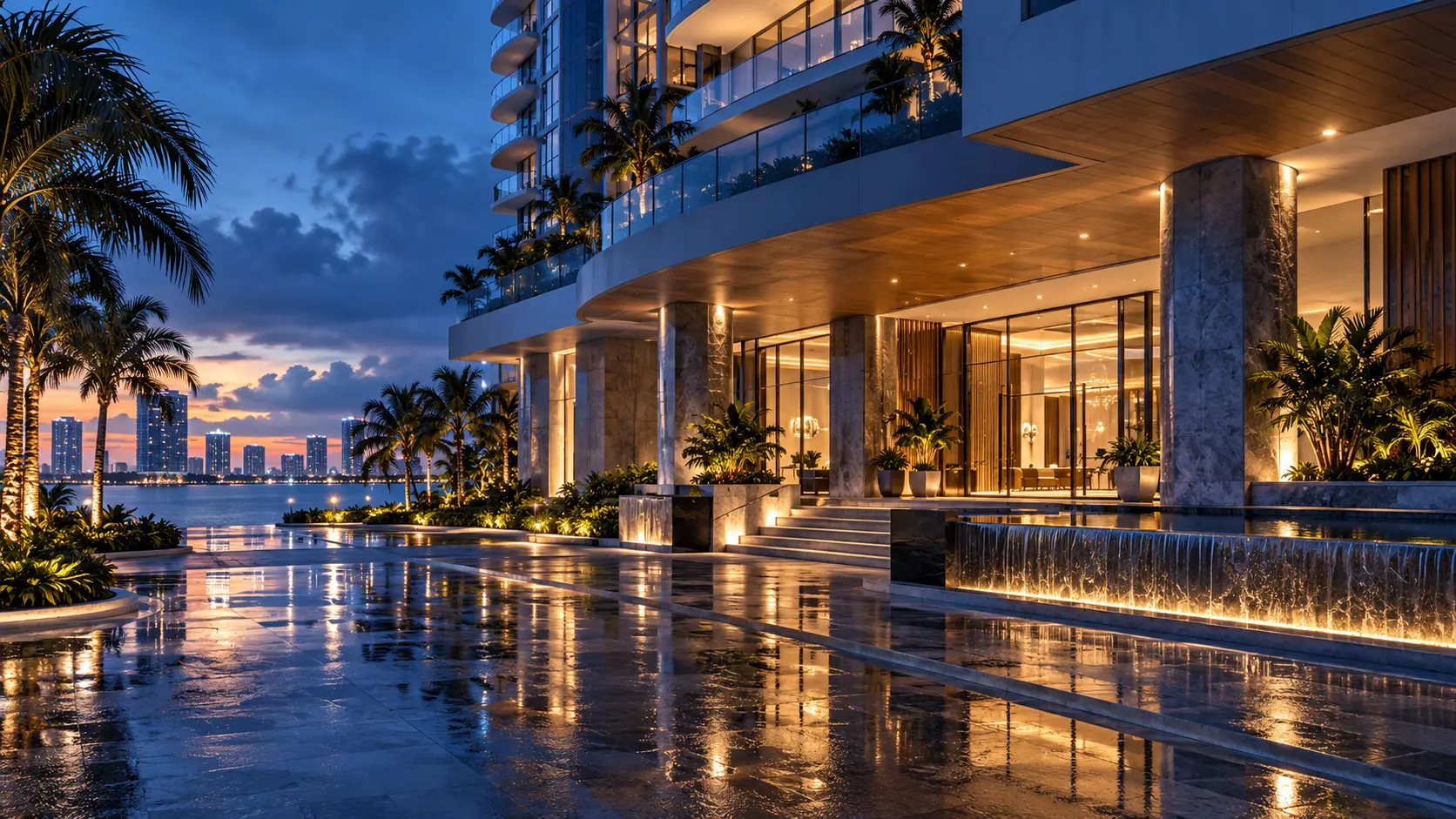
 Conceptual image of a Miami-inspired coastal tower after rain; not a photograph of a specific building or flood event.
The direct answer
Evaluate the exact Miami address and the whole building, not just the residence's floor. Start with the county's current flood-zone determination, then ask how water reaches the garage, lobby, electrical equipment, elevators and emergency access. Pair those physical questions with the association's insurance, inspection, reserve and capital-work records. A high-floor unit can still share the cost and disruption of vulnerable common areas.
What makes Miami different
Miami-Dade publishes an address-searchable flood map and flood guidance, while the City of Miami maintains stormwater and sea-level-rise information. Those are verified public tools; neither predicts whether one garage or lobby will flood in a future event. Miami's mix of waterfront and inland towers, older and newer buildings, and different ground-floor designs makes a tower-wide review more useful than a simple bayfront-versus-inland label. A building's response to prior storms must be established from its own records, not assumed from the neighborhood.
Build the address-specific file
Request the current flood determination and any available elevation information. Walk the route from street and garage to unit, noting low openings, ramps, equipment rooms, generator placement and alternate access. Review governing documents, financial statements, budgets, reserves, inspection reports, recent board minutes, insurance declarations and any assessments with appropriate professionals. Ask management for documented water-intrusion history and completed mitigation work; distinguish a planned project from work that is funded and finished.
- Map the exact address and confirm the current flood designation
- Inspect garage, lobby, equipment and access exposure
- Read association insurance, inspections, reserves and assessments
- Separate documented improvements from resilience claims
Todd’s interpretation
Todd's interpretation is that resilience is a building-level ownership question. A spectacular view can justify a premium, but it should not distract from how the tower will function and be financed after severe weather. The strongest comparison puts the residence, common elements and association balance sheet in one file.
A Local’s Guide
What daily life in Miami actually feels like
Miami is not one lifestyle market; it is a network of highly distinct districts connected by culture, business, water and international travel.
The City of Miami fronts Biscayne Bay; the Atlantic beaches are across the causeways in Miami Beach, Key Biscayne, Surfside, Bal Harbour and Sunny Isles.
The Underline, Museum Park, Bayfront Park, Virginia Key and neighborhood bayfront parks provide very different forms of outdoor life.
Miami’s standouts are district-specific: Brickell for polished city dining, the Grove for neighborhood restaurants, Wynwood for creative concepts and the Design District for destination luxury dining.
Dinner Key, Miamarina, EPIC, Sea Isle and other city marinas create broad bay access, but neighborhood convenience and slip structure vary.
Crandon, Miami Beach Golf Club, Normandy Shores and The Biltmore provide the most recognizable central options.
Brickell City Centre, the Design District, Midtown, Coconut Grove and nearby Bal Harbour each deliver a different retail and street-life experience.
Questions Clients Ask
Frequently asked questions
Does a high-floor Miami condo avoid flood-related costs?
No. The residence may be elevated, but owners can still share costs for affected garages, lobbies, mechanical systems, insurance and capital work.
Is a flood-zone map enough to judge one building?
No. Use the map as a starting point, then inspect the property's elevations, openings, systems and documented history with qualified professionals.
Which association records matter for resilience?
Review insurance, budgets, reserves, inspections, board minutes, assessments and completed or planned work, subject to current disclosure rules.
Should buyers rely on a seller's description of storm performance?
Ask for records and independent inspections. Past performance is useful context but cannot guarantee future conditions.