
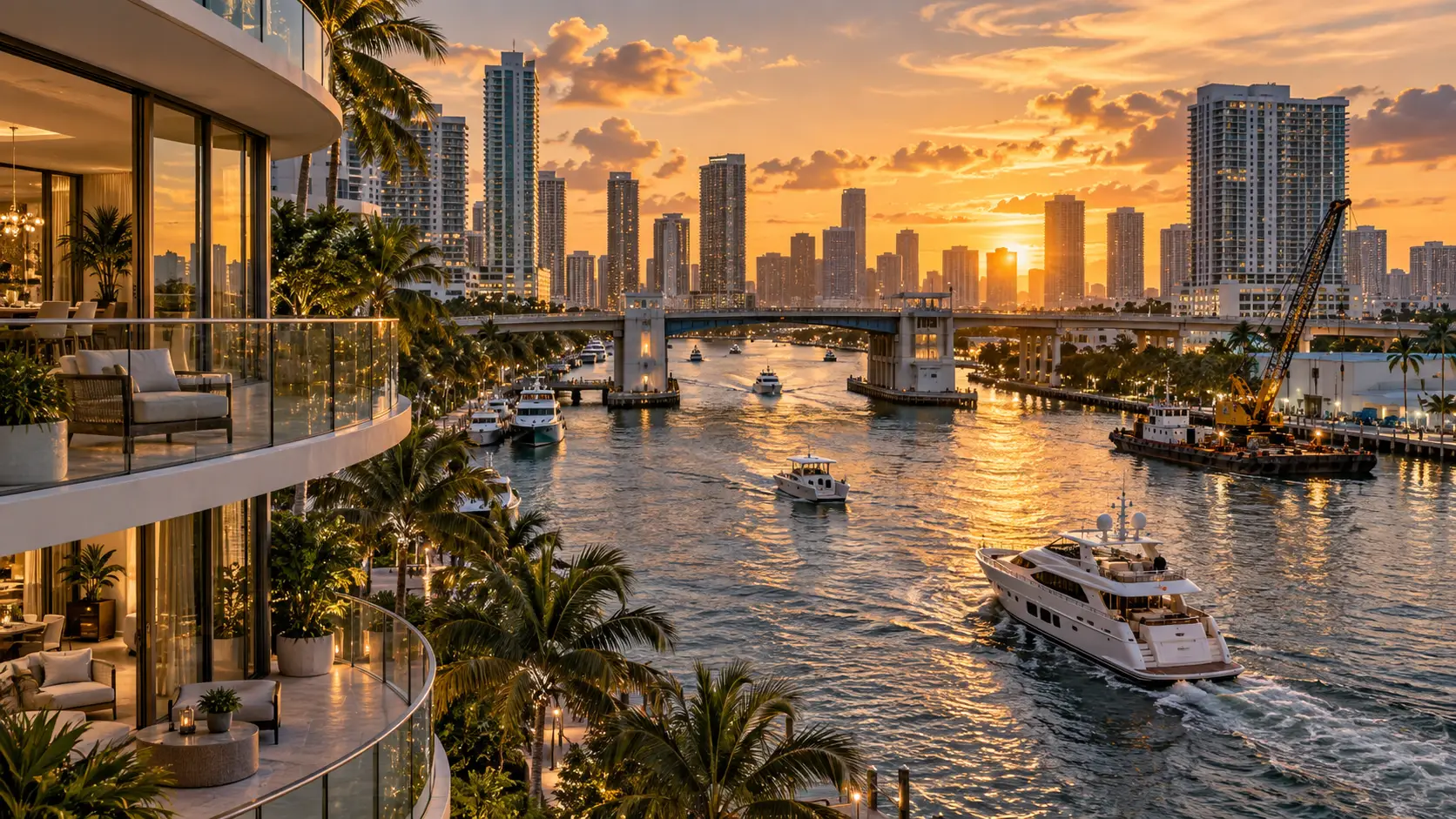
 Conceptual image inspired by Miami River; not a photograph of a specific property, building, club or listing.
The short answer
Evaluate the river at the exact address and time of day. Boating access, bridge conditions, working-waterway activity, construction, traffic, pedestrian routes and future view corridors can change materially from one stretch to another.
For a condominium, pair that block review with the full building analysis: reserves, insurance, assessments, completion status, warranties, management and any planned work. A waterfront view should not substitute for operational due diligence.
What is verified—and what still needs property-specific review
City planning, the Miami River Commission, county property and flood sources, and Florida condominium resources establish the public framework. Buyers must still confirm navigability, projects, documents, insurance and conditions for the exact residence.
- Visit the exact block at multiple times
- Verify vessel route and bridge conditions
- Study construction and future view corridors
- Review building finances and operations
Todd’s interpretation
The Miami River’s appeal is its contrast—urban energy, waterfront dining and access toward Biscayne Bay. That same complexity makes micro-location more important than a broad riverfront label.
A Local’s Guide
What daily life in Miami actually feels like
Miami is not one lifestyle market; it is a network of highly distinct districts connected by culture, business, water and international travel.
The City of Miami fronts Biscayne Bay; the Atlantic beaches are across the causeways in Miami Beach, Key Biscayne, Surfside, Bal Harbour and Sunny Isles.
The Underline, Museum Park, Bayfront Park, Virginia Key and neighborhood bayfront parks provide very different forms of outdoor life.
Miami’s standouts are district-specific: Brickell for polished city dining, the Grove for neighborhood restaurants, Wynwood for creative concepts and the Design District for destination luxury dining.
Dinner Key, Miamarina, EPIC, Sea Isle and other city marinas create broad bay access, but neighborhood convenience and slip structure vary.
Crandon, Miami Beach Golf Club, Normandy Shores and The Biltmore provide the most recognizable central options.
Brickell City Centre, the Design District, Midtown, Coconut Grove and nearby Bal Harbour each deliver a different retail and street-life experience.
Questions Clients Ask
Frequently asked questions
Is every Miami River residence equally convenient for boating?
No. Dock rights, depth, bridge conditions, route and vessel dimensions require address-specific verification.
Should construction be reviewed beyond the neighboring parcel?
Yes. Study nearby approvals, planned towers, traffic changes and possible view-corridor effects.
Does waterfront status eliminate flood review?
No. Review current public data, elevation, insurance and building-specific protections.
Can a buyer compare completed and pre-construction residences?
Yes, but timing, deposits, warranties, operating history and final ownership costs must be normalized.