
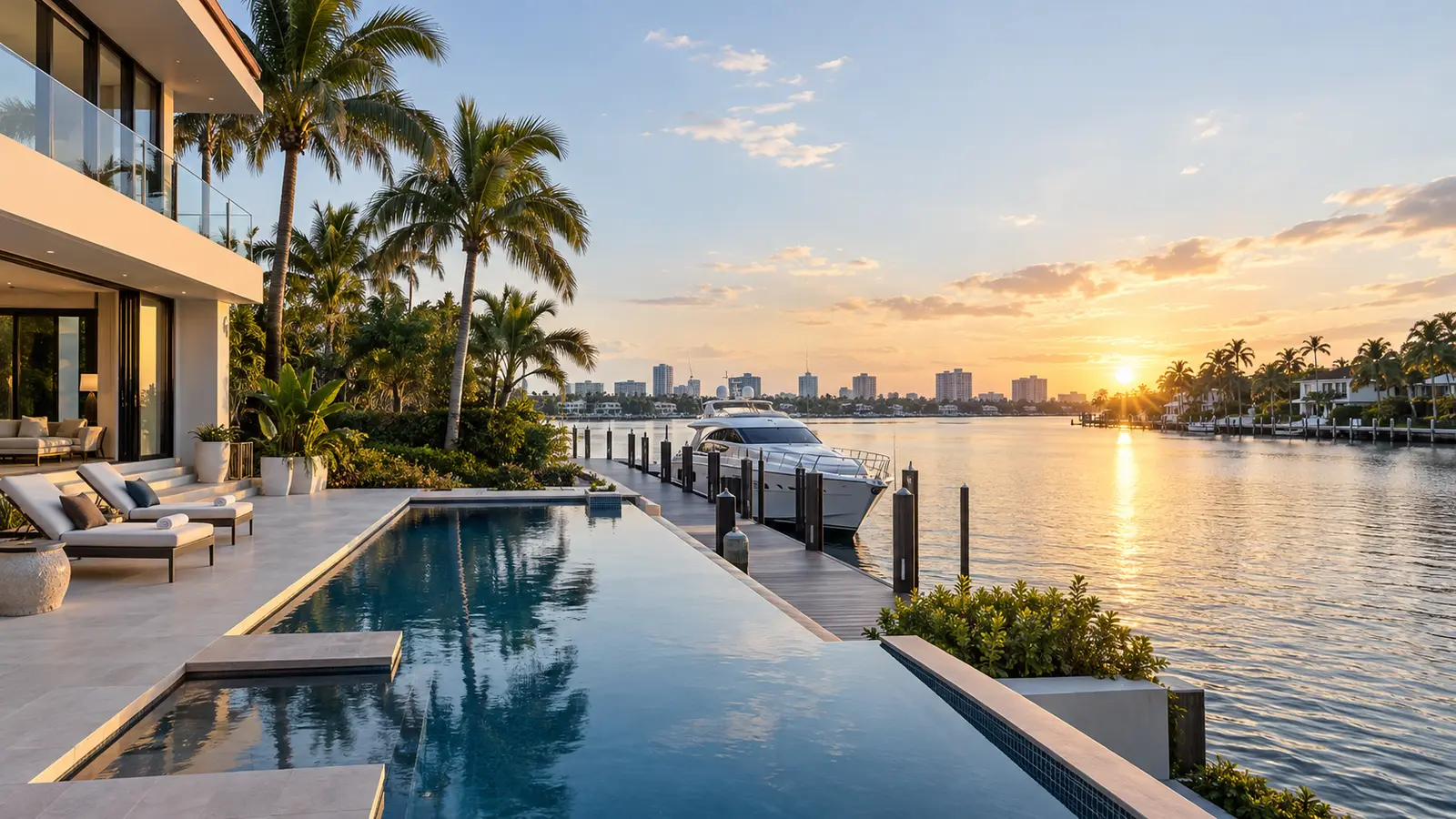
 Conceptual image inspired by Fort Lauderdale; not a photograph of a specific property or listing.
The short answer
Before launching a Fort Lauderdale waterfront home, assemble the property and marine story in one verified package. Buyers need to understand not only the residence, but also the dock, seawall, permitted improvements, waterway and practical route for their vessel.
Photography can create attention, but precise documentation creates confidence. Record dock dimensions without overstating capacity, map known bridges and route questions, and distinguish the seller’s records from items a buyer must independently verify with marine, legal, insurance and municipal professionals.
What to verify before making the decision
Reconcile the survey, public record and permits; organize roof, opening, system and improvement documents; and address visible maintenance before photography. Obtain qualified observations on the seawall, cap, dock, pilings and lift when available. Flood information, elevation documents, insurance history and known claims should be organized accurately rather than summarized through broad neighborhood claims.
- Document the dock, seawall and permitted marine work
- Reconcile improvements with surveys and permit records
- Prepare flood, insurance and major-system information
- Market the verified boating use case without guarantees
Todd’s interpretation
The strongest waterfront launch does not rely on the phrase ‘ocean access.’ It helps the right buyer quickly understand the home, the waterway and the questions still requiring vessel-specific confirmation. That transparency can reduce avoidable uncertainty during inspections and negotiation.
A Local’s Guide
What daily life in Fort Lauderdale actually feels like
From sunrise along the Atlantic to an evening on Las Olas, Fort Lauderdale moves easily between beach, boating and city life. Its waterfront neighborhoods, modern residences and relaxed sophistication create a lifestyle that feels polished without losing the ease that draws people to South Florida.
Fort Lauderdale Beach has an active, polished promenade; quieter sand and reef access are found north toward Lauderdale-by-the-Sea.
Hugh Taylor Birch State Park, Riverwalk, Holiday Park, Bonnet House grounds and the beachfront path support biking, paddling, walking and year-round outdoor use.
Local standouts include Heritage, Casa D’Angelo, Coconuts and 15th Street Fisheries; Las Olas Boulevard adds a dense mix of restaurants, cafés and evening activity.
Bahia Mar, Pier Sixty-Six Marina, Hall of Fame Marina and the city’s New River facilities anchor a deep marine ecosystem, but bridge, draft and inlet-route details remain address-specific.
Coral Ridge Country Club and Fort Lauderdale Country Club are established private options; nearby public and resort courses broaden the choice.
Las Olas Boulevard, The Galleria and the Riverwalk arts district provide the city’s strongest mix of boutiques, galleries, culture and everyday convenience.
Questions Clients Ask
Frequently asked questions
Should a seller state the maximum boat size the property can accommodate?
Only when the statement is supported by reliable measurements and appropriate verification. Dock length, beam, draft, turning room, depth, tides and bridges all matter.
Do buyers care about seawall records before making an offer?
Many do. Available permits, invoices, engineering information and maintenance history can help buyers understand condition while still conducting their own inspection.
Is a recent interior renovation enough to position a waterfront home as turnkey?
Not by itself. Buyers also evaluate roof, openings, systems, drainage, insurance and marine infrastructure.
Which call to action works best for this article?
A confidential home-evaluation conversation is the most relevant next step for a seller preparing a Fort Lauderdale waterfront launch.