
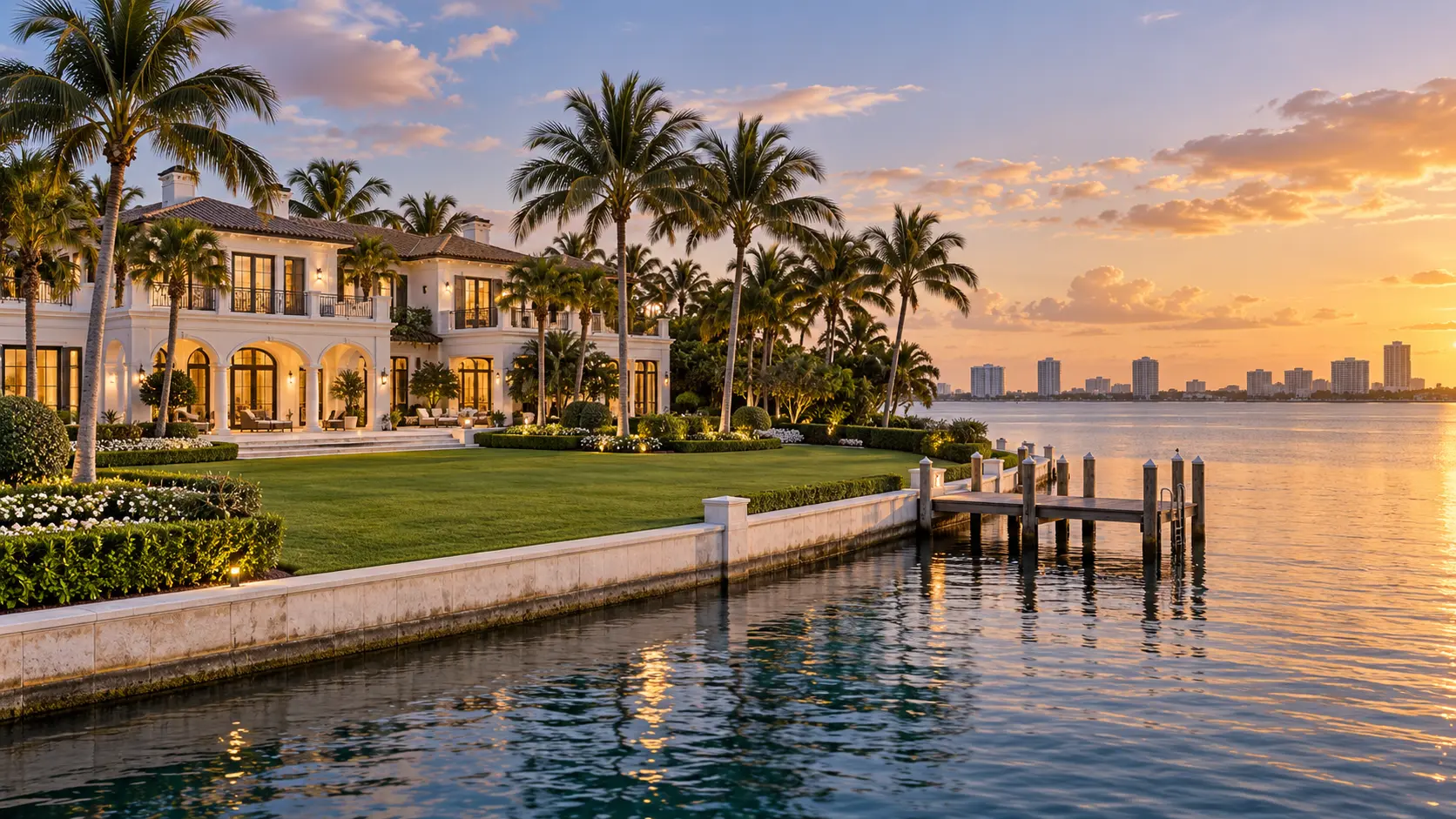
 Conceptual image inspired by Palm Beach’s Lakefront Corridor; not a photograph of a specific property, building, club or listing.
The short answer
Prove the land-water relationship, not just the sunset. Frontage, dock configuration, seawall condition, observed depth context, permitted improvements, privacy and the estate’s major systems should be documented before the campaign asks buyers to value rarity.
The Palm Beach’s Lakefront Corridor lens
Lakefront parcels differ in orientation, Lake Trail relationship, neighboring sightlines, vessel route and how the residence meets the water. Those differences can outweigh broad price-per-foot comparisons.
What should be verified
Prepare survey, title, permits, landmark or zoning information, marine records, flood and insurance material, roof, openings, generator and mechanical history. Require independent review for vessel fit, tides, depth and marine condition.
- Document frontage, dock and seawall
- Show view and privacy accurately
- Reconcile estate systems and permits
- Use parcel-specific waterfront comparables
Todd’s interpretation
The most effective lakefront campaign makes the view emotional and the infrastructure understandable. That combination allows a qualified buyer to value the estate rather than discount uncertainty.
Questions Clients Ask
Frequently asked questions
Can a seller guarantee dockage for a yacht?
No. Provide verified dimensions and route context, then require vessel-specific review.
Should the seawall be inspected before listing?
Current professional information can strengthen buyer confidence and pricing clarity.
Does lakefront automatically mean direct ocean access?
Route and vessel constraints must be evaluated for the specific property.
How should Lake Trail proximity be marketed?
Describe the property’s actual relationship and access without implying private rights that are not documented.