
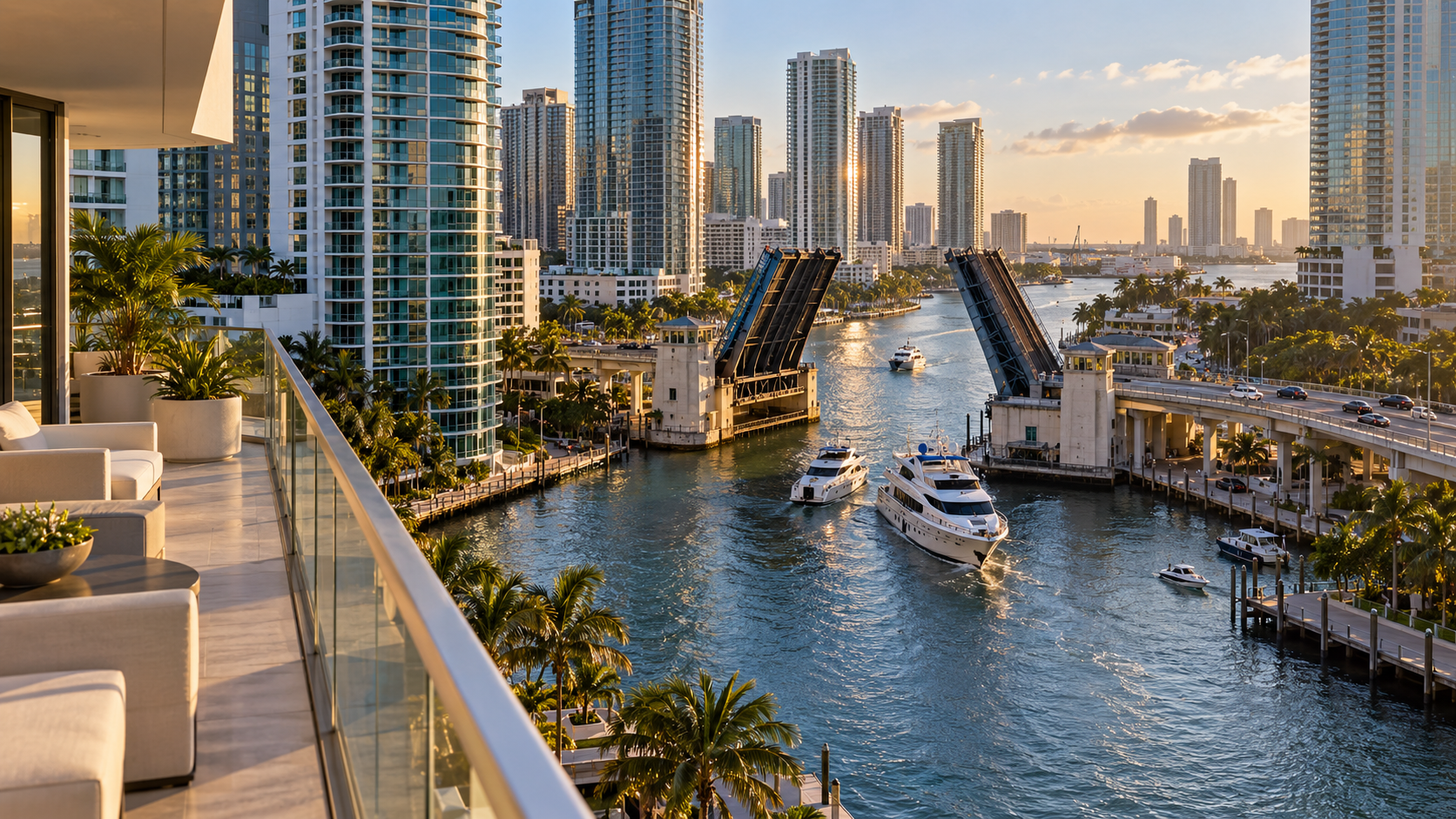
 Conceptual Miami River-inspired bridge, waterway and condominium-access scene; not a photograph of a specific building or listing.
The direct answer
Test the exact route at the hours you expect to use it and compare at least two approaches to the building. Note movable-bridge openings, school and work traffic, construction, delivery access, rideshare pickup and the route to groceries, airports and major roads. Then evaluate whether the river activity is a benefit or a friction point for your routine. A short map distance can feel very different when the bridge, street grid and building arrival are considered together.
What makes Miami River different
The Miami River is both a residential setting and a working waterway. Miami-Dade County operates movable bridges around the clock, and bridge procedures change during severe-weather preparation in coordination with other agencies. Buildings on different bends or sides of the river can have distinct street approaches even when they appear close on a map. Boating activity, marine businesses, development and downtown traffic make in-person route testing unusually important.
Build the address-specific file
Drive the route on a weekday morning, late afternoon and a weekend if the location will be used full time. Identify alternate crossings and verify the garage entrance, guest parking, loading, delivery and service routes. Review current public road, bridge and development information without assuming conditions will remain fixed. Pair the access review with the building’s governing documents, insurance, reserves, inspections, assessments and any known construction affecting the immediate approach.
- Test primary and alternate routes at the hours you will travel
- Observe bridge openings, river activity and street-level access
- Verify garage, loading, delivery and guest-arrival logistics
- Review nearby projects and building obligations without predicting permanence
Todd’s interpretation
Todd’s interpretation is that Miami River value is highly routine-dependent. A buyer who works nearby, boats frequently or appreciates the changing waterway may view activity as an advantage. Another buyer may place greater value on predictable bridge-free access. The right unit is the one whose route, view and building operation support the buyer’s actual week.
A Local’s Guide
What daily life in Miami actually feels like
Miami is not one lifestyle market; it is a network of highly distinct districts connected by culture, business, water and international travel.
The City of Miami fronts Biscayne Bay; the Atlantic beaches are across the causeways in Miami Beach, Key Biscayne, Surfside, Bal Harbour and Sunny Isles.
The Underline, Museum Park, Bayfront Park, Virginia Key and neighborhood bayfront parks provide very different forms of outdoor life.
Miami’s standouts are district-specific: Brickell for polished city dining, the Grove for neighborhood restaurants, Wynwood for creative concepts and the Design District for destination luxury dining.
Dinner Key, Miamarina, EPIC, Sea Isle and other city marinas create broad bay access, but neighborhood convenience and slip structure vary.
Crandon, Miami Beach Golf Club, Normandy Shores and The Biltmore provide the most recognizable central options.
Brickell City Centre, the Design District, Midtown, Coconut Grove and nearby Bal Harbour each deliver a different retail and street-life experience.
Questions Clients Ask
Frequently asked questions
Do Miami River bridge openings follow one simple schedule?
Do not assume so. Operations vary by bridge and current conditions; review official information and test the route in person.
Should buyers rely on travel time shown during one tour?
No. Test the building from relevant destinations at several times and identify alternate approaches.
Can nearby construction change the daily route?
Yes. Review current public project and permit information, then treat future conditions as uncertain rather than guaranteed.
Does good road access replace condo-document review?
No. Access, unit quality and the association’s physical and financial condition are separate parts of the decision.